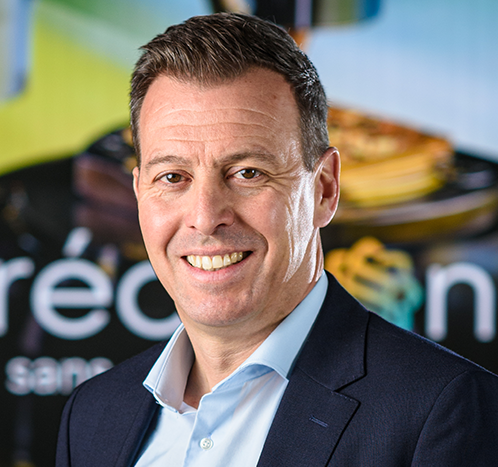
Moving from investment banking to industry often means choosing international competition, up against tough adversaries. That is the decision Nicolas Curty made in his thirties, after an initial career phase dedicated to corporate financing.
It was the business leaders he met during that period who inspired him to join Affolter SA, a manufacturing jewel of the Bernese Jura — the French-speaking part of the canton of Berne, historically tied to watchmaking and microtechnology. A maker of watch gears, among other things, but also a designer of the machines used to produce them, this family-owned group founded in 1919 is a winning example of an evolution built on anticipating future challenges without sacrificing an extraordinary standard of quality.
In this interview, Ad Valoris asks Nicolas Curty about his career, closely intertwined with that of Affolter SA, whose interests he has led for many years.
Nicolas, what leads a man from Swiss banking to choose industry?
Banking was really just a professional parenthesis. I studied business economics at the HEG in Neuchâtel, which pointed me more toward production than finance. That said, I learned a great deal from that first experience. But I quickly returned to a world more in line with my family tradition.
21 years after your first steps at Affolter SA, you now lead its destiny. Why such loyalty?
It is a century-old family business with a solid shareholding structure that embraces the idea of long-term development. We run many projects, regularly intervene along our value chain to optimise our processes, design new products, and enter new markets. This dynamism from the Board fosters our culture of openness. With around 200 employees, we prioritise stability and uphold the tradition of quality that is distinctly Swiss. Like any company, we have weathered crises, but the loyalty and commitment of its human element — from the workshop floor to the governing bodies — has always been a bulwark against difficulties.
You are not a member of the owning family. How do you manage to maintain the necessary neutrality and firmness?
Rule number one is to put the company’s interests first. The maturity of the shareholders, who regard Affolter SA as a member of the family, is a key enabling factor.
Who are your competitors?
We have competitors in Switzerland for the watchmaking side and all over the world for the machine-tool side. Competitive intelligence should not drive our business model, but it does allow us to observe how the world is moving.
Was there ever a moment when you doubted an important strategic decision?
In 2019, the third generation of the family left the Group. The generation that succeeded them found their footing in a difficult economic environment, with insufficient profitability in certain areas. I was appointed Chairman of the Board at that time. Our product portfolio, particularly the machines, needed rethinking. I proposed a seminar with the board members and management so we could lay everything on the table, identify areas for improvement, and agree on a new overall strategy. I was questioning the economic relevance of our “machines” division, which was demanding in terms of investment and not very profitable. My doubts were dispelled through that tremendous teamwork and the mobilisation of all our talents. Eight years on, I know just how fruitful that meeting was and how it enabled us to relaunch the company around our specificity as a machine manufacturer.
What did you do to sustain and develop the “machines” business?
It is first and foremost a strategic pillar for us, because it means we depend on no one to produce our own gears. We automated a significant portion of manufacturing in order to boost productivity, ensure the excellence of our quality, control planning, and ultimately be competitive on the global market. Automation is the key to industrial success, and we will be enriching it in the very near term with artificial intelligence. Combined with our leadership in the watchmaking sector, it gives us access to the humanoid robotics market. If we did not build and sell our own machines, we would be nothing more than a simple subcontractor trying to do its best with the same tools as its competitors.

Why do humanoid robot manufacturers find you interesting?
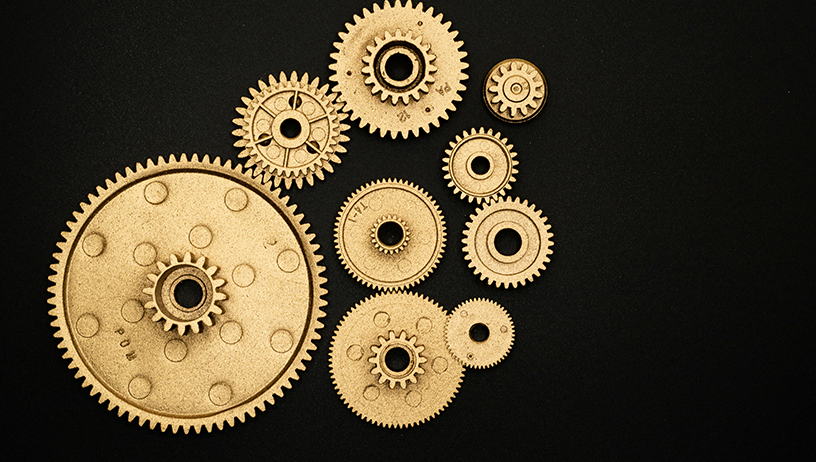
We are a leader in gears for high-end watchmaking and microtechnology. Our expertise is an added value for the humanoid robotics industry, for which we are developing specific know-how built on a century of experience. A hand, a joint, robot heads rotating 360° all function with gears — and we produce them. We are also active in other sectors with the same needs, including automotive, aeronautics, and defence.
What is your outlook for the next twenty years?
Our goal is to remain at the technological forefront, both in gear production and in the manufacture of machines for sale.
Do you believe the world is at a tipping point with the rise of artificial intelligence?
It is hard to grasp what is happening. It is multidimensional. In the world of work, we used to talk about robotics; today, artificial intelligence is at the heart of every strategy. It is a genuine revolution.
What is the famous Swiss craftsmanship worth in the face of all this?
That is precisely what AI cannot replace: the human capacity to conceive new models based on intuition and to shape objects by giving them a soul. Swiss authorities bear a great responsibility for the country’s near future; they must integrate the systemic upheavals ahead so as not to be caught off guard.
What, in your view, makes an industrial organisation intelligent today?
In our field, it comes down to equipment and automation. Going forward, AI systems will be decisive — and very soon — in the competitive battle. Artificial intelligence saves time and will plausibly trigger a new wave of price competition.
How will you justify a product costing more because it is Swiss?
Unlike some European countries, Switzerland still has a significant industrial base. It does not target cheap products, or does so very little. On the other hand, we rank among the world leaders in high precision, thanks in particular to an exceptionally strong academic and vocational training pipeline. Clients turn to Switzerland for pragmatic reasons: they buy because they cannot find the same level of quality — or service — elsewhere. The reliability of Swiss industry, in a deregulated and unstable economic landscape, is a compelling argument in itself.
If you were to share a few convictions with the new generations of engineers and technicians, what would you tell them?
Swiss engineering is highly skilled, but that is no longer enough. You must also be able to develop a degree of creativity and a capacity to understand strategic challenges.
What do you offer them at Affolter SA?
We offer an excellent working environment, interesting prospects for development, and we champion the idea of an immersive professional journey — one where you practise your craft in depth, with a spirit of inquiry, mastery, and even excellence. The Swiss, who have lived in relative comfort over the past 50 years, must return to a greater state of vigilance, because the global battle has entered a new dimension with artificial intelligence and the return of protectionism. Economic instability, as well as the digital impact on job functions, will require new capabilities, including in management.
As someone who thinks about technology every day, what still manages to surprise you?
Human beings — because they are capable of adapting magnificently to every change. When you look at the history of humanity, there have been unimaginable shocks. Mankind always manages to adapt and to create a positive future. We may simply be lacking great, selfless, visionary figures to sketch the contours of a shared future.


“AI cannot replace the human ability to design new models based on intuition and to shape objects by giving them a soul.”
Nicolas Curty, President and CFO of the Affolter Group
Contact us
Write to usFollow us on LinkedIn
Follow usLearn more
Ad Valoris in conversation with Philippe Metzger, Secretary-General and CEO of the IEC
Exclusive interview with the IEC, a technical standardization organization based in Geneva....
 Ad Valoris répond