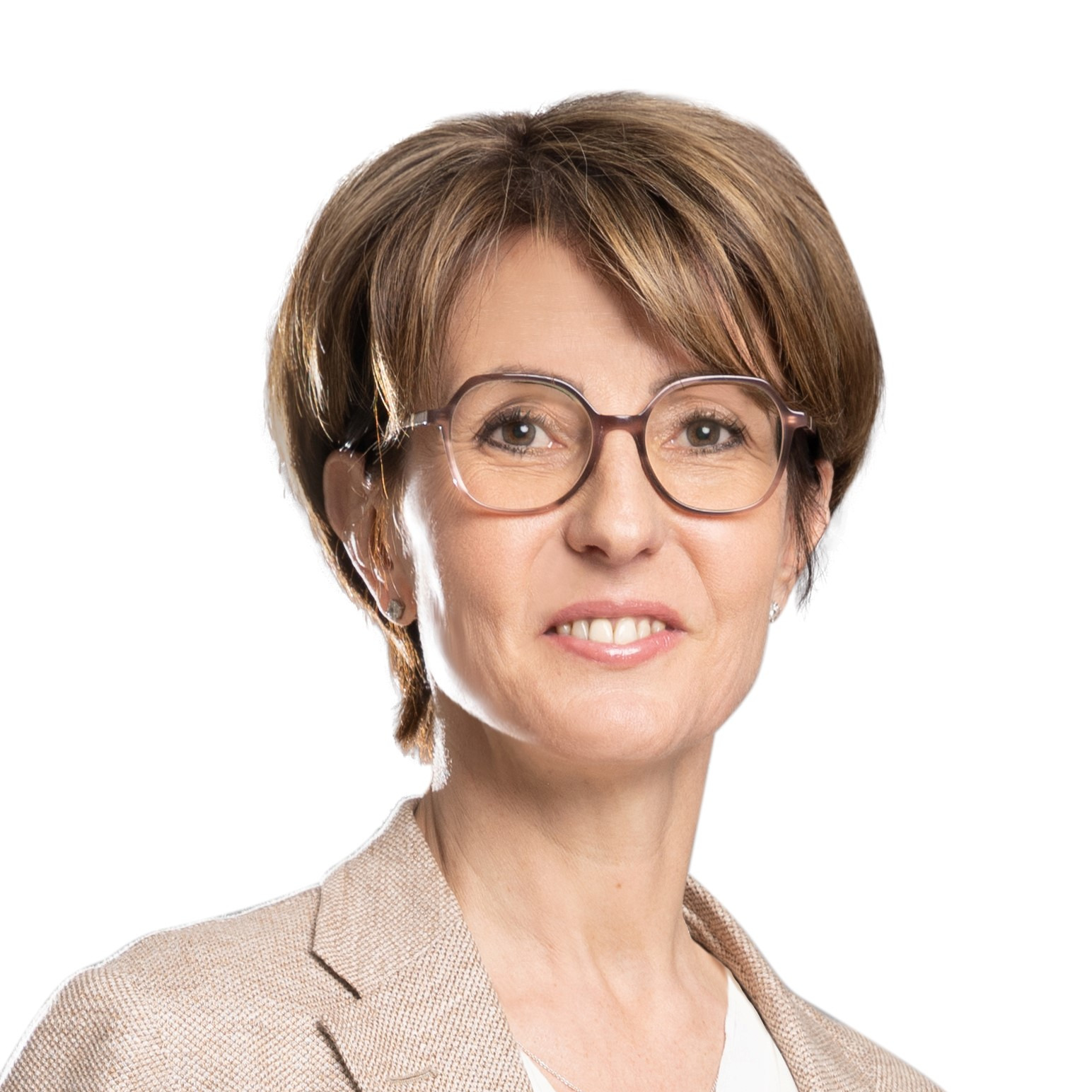
How does the Swiss economy stand in its present reality, and in its prospects, within the global economic concert? Director of the Fédération Patronale et Économique and a member of the National Council, Nadine Gobet offers a clear-eyed analysis of the challenges awaiting our companies, and of what sustains her unwavering confidence in the future.
Nadine, let us begin with what running a company means in Switzerland in 2026: is it harder than it was twenty years ago?
I would not say that it is harder, but it is certainly different, and for reasons that are not solely economic. What has changed, more broadly, is what now defines our relationship to work. For a long time, SMEs operated along vertical, hierarchical lines. Decisions came down from the strategic core to the teams, and that arrangement was broadly accepted. Today, employees’ aspirations are embodied in the meaning and the merit of their work, in their active contribution to decisions, and in the attention paid to wider social trends.
The Covid crisis accelerated that change. Swiss people questioned their priorities, their values and the place work should occupy in their lives; and that reflection now shapes the way companies operate. The shift is more perceptible still among the young. Where my own generation equated personal fulfilment with professional success, the new generations now seek a better balance between private and professional life. Salary is no longer the only criterion: flexibility, the possibility of remote working, the quality of the working environment and the prospects for career and personal development all weigh in their choices. I pass no value judgement on this evolution. It exists, and employers must adapt to it. All the more so since, in a context of shortage of skilled labour, attracting and then retaining talent has become a strategic issue.
Business leaders often describe an accumulation of administrative and regulatory constraints. Has this complexity become a brake on the development of SMEs?
Yes. That complexity has undeniably increased and is, to my mind, a genuine concern. The SMEs we support testify to the exhausting intensification of procedures and controls. When an event occurs, the answer almost always consists in introducing one more law, one more directive or one more administrative obligation. Society accepts risk-taking less and less. Yet all economic activity carries a measure of risk. This regulatory inflation affects companies that have neither the human nor the financial means to cope with it. Large corporations can set up departments dedicated to compliance or sustainability. SMEs simply do not have those resources.
To this is added a form of contradiction in our behaviour as citizens. We require Swiss companies to meet ever stricter standards of health, safety and sustainability, while foreign platforms supply ever more products into Switzerland without being subject to the same requirements.
“While I am convinced that rules must be preserved, they must never become an end in themselves. Public authorities exist to create the conditions that allow companies to develop, not to hold back their activity.”
Artificial intelligence is taking new forms, humanoid robots among them. Is it a threat to employment?
As is often the case with major technological ruptures, everything will depend on the use we make of them. Artificial intelligence represents an opportunity for companies, which will gain in efficiency, automate certain repetitive tasks and access information more rapidly. I do not believe, however, that it can take the place of what gives human judgement its value. An answer generated by an artificial intelligence may be extremely pertinent, but, without critical thinking, the risk is to hold as true everything a machine produces.
Technological progress should not be fought, but it is justified only by the authority of human qualities: the capacity to reason, to step back, to exercise discernment, to cooperate, to design for the common good. We shall have to teach young people to use these tools, but also to preserve their faculty of analysis. A society that surrendered its critical thinking in favour of ready-made answers would take an unacceptable risk.


Faced with technological, economic and geopolitical upheaval, what in your view will be the principal strengths of Swiss companies over the next ten years?
Switzerland does not have the luxury of founding its prosperity on natural resources. We have neither oil, nor gas, nor raw materials in abundance. Our strength lies in our capacity for innovation, in the quality of our education system and in the excellence of our skills. Swiss companies invest in research, develop high value-added products and rely on quality rather than on volume.
Our dual training system is also an exceptional advantage. It allows companies to have operational employees quickly, while creating uninterrupted bridges between practice and knowledge. In a world where technologies evolve at an unprecedented pace, this capacity to learn continuously will be essential. I am convinced that the organisations which succeed will be those that strengthen their market intelligence and their power to innovate.
Does the political world sufficiently appreciate the realities companies experience?
Exchanges do exist and they are indispensable, but a gap remains between the way a measure is conceived and the way it will actually be applied within a company. When a new regulation is drawn up, it is because we wish to improve a situation, strengthen a protection or respond to a concern within society. But it is essential also to measure the practical consequences of those decisions. Every new obligation represents time, human resources, administrative costs and sometimes a loss of competitiveness. Taken in isolation, each text may seem reasonable. It is their accumulation that ends up weighing on companies, and on SMEs in particular.
I therefore argue for a pragmatic approach. Before adding a new rule, one must always ask what real added value it brings and what its concrete effects will be. Switzerland long built its prosperity on a liberal system and on an environment favourable to economic initiative. Preserving that balance is, in my eyes, a collective responsibility.
Faced with geopolitical tensions, supply disruptions, the energy transition and customs tariffs, do you remain optimistic about the future of the Swiss economy?
Yes, profoundly. We are going through a complex period and no one can ignore the challenges that lie ahead. Our economy has to contend with international instability, heightened competition, more numerous regulatory requirements and technological change of unprecedented magnitude. But the history of Switzerland demonstrates precisely that our country has always known how to turn constraints into opportunities. Our companies have developed a remarkable capacity for adaptation. They innovate, invest in skills, constantly seek out other markets and know how to question their models when it becomes necessary.
I subscribe to that vision, which rests on responsibility, on the quality of dialogue between partners, on our education system, and also on a constant determination to find solutions rather than to endure difficulties. Provided we preserve an environment that encourages creativity, that trusts companies and that avoids regulatory excess, Switzerland will continue to rank among the most successful economies in the world.

“The history of Switzerland demonstrates precisely that our country has always known how to turn constraints into opportunities. Our companies have developed a remarkable capacity for adaptation.”
Nadine Gobet, Director of the Fédération Patronale et Économique and member of the National Council
Contact us
Write to usFollow us on LinkedIn
Follow usLearn more
Ad Valoris talks with Nadine Gobet, Director of the Fédération Patronale et Économique and member of the National Council
A look back at the inauguration of our Lausanne offices, Thursday 8 October
Discover what this day was made of, and what gave it its rhythm....
 Ad Valoris répond